Where your first hundred real fans come from
Not from reach. From a narrow group of people who already want what you make, in a place small enough that you can be the one they know, given something to belong to once they arrive.
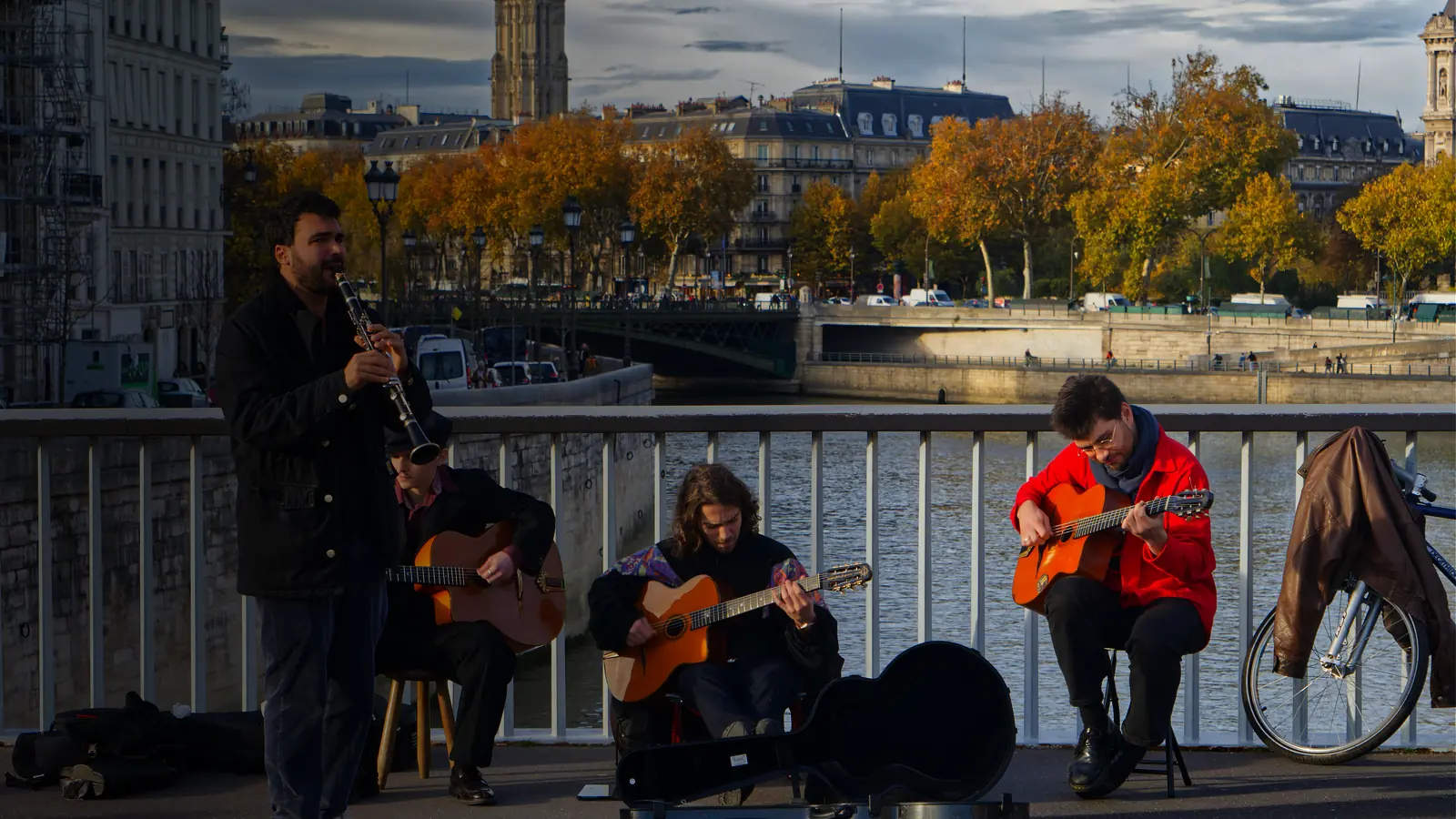
Pascal Bernardon · Unsplash License
Ask an artist who their music is for and you usually get a genre and an age range. That is not an audience, it is a demographic slice, and nobody has ever felt spoken to by one.
Your first hundred come from somewhere much more specific.
Write for the sliver {#the-sliver}
There is a group of people who play music nobody else they know has heard of. They find things early, they care about it more than is reasonable, and they tell three friends. Every artist with a real following got the first part of it from these people.
They are not a demographic. They are a behaviour.
Writing for them changes what you post. You stop explaining who you are as though addressing a stranger who needs convincing, and you start writing as though addressing someone who already gets it. Details instead of pitches. The name of the pedal. The take you kept because the voice cracked. The thing you were angry about when you wrote the second verse.
Broad posts get scrolled past by everyone equally. Specific posts get ignored by most people and hit one person very hard. The second is what you want, because the second is a person who tells someone.
Own one mile {#one-mile}
The second source is geography, and it is the one independent artists give up on fastest because it feels small.
You will not be the biggest artist on the internet this year. You could plausibly be the artist people in your neighbourhood know. That is an achievable target and it produces things the internet does not: a promoter who returns your messages, a venue that gives you a Thursday, forty people who come because they have seen you around, another band who put you on their bill.
Make your city care first, and do it by being physically present in it. Go to other people’s shows. That is most of it.
Give them something to join {#something-to-join}
Now the part that turns a hundred listeners into a hundred fans, which is not the same thing.
People do not become fans of music. They become fans of belonging to something, and the music is the reason the something exists. Which means you have to build the something, and it is smaller than it sounds:
A name for them. Not clever. Just a word that exists, so people have a way to say they are one.
A colour, or an object, or a way the artwork always looks. Something recognisable at a distance and reproducible by a fan with a phone.
A ritual. One thing you do every time. The same sign-off, the same thing at the end of every show, a track that always closes. Rituals are what make people feel like they were there for the early ones.
None of this needs to be announced. You just start doing it, consistently, and it becomes true.
The order matters {#the-order}
Sliver first, because it decides what you write. Mile second, because it is where the sliver is reachable in person. Ritual third, because a ritual with nobody in the room is just a habit.
Doing them backwards, which is what most people do, gives you a fanbase name and a hashtag and nine listeners.
Your move. Write one sentence describing the person your last song was actually for. If the sentence would fit ten thousand other artists, it is not specific enough yet.
"Where your first hundred real fans come from" as a carousel publishes on @109music.co. The embed drops in here once it is live.
Common questions
Is it a mistake to make music for a narrow audience?
Narrow is how anything starts. A hundred people who feel the record was made for them will do more for a career than ten thousand who thought it was fine. Widening happens later and it happens on its own, through the people who already care.
Does a local scene still matter when everything is online?
It matters more, because it is the one place where you can be physically present and nobody else is competing on that. Online you are one of millions. In your own city you can be at every show, know the promoters, and be the name that comes up when someone needs an opener.