How to turn a viral week into an audience you own
A spike gives you attention on loan. This is the order of operations for converting it: where to send the traffic, what to collect while it is hot, and why chasing the spike with your whole feed costs more than it pays.
tom depont · Unsplash License
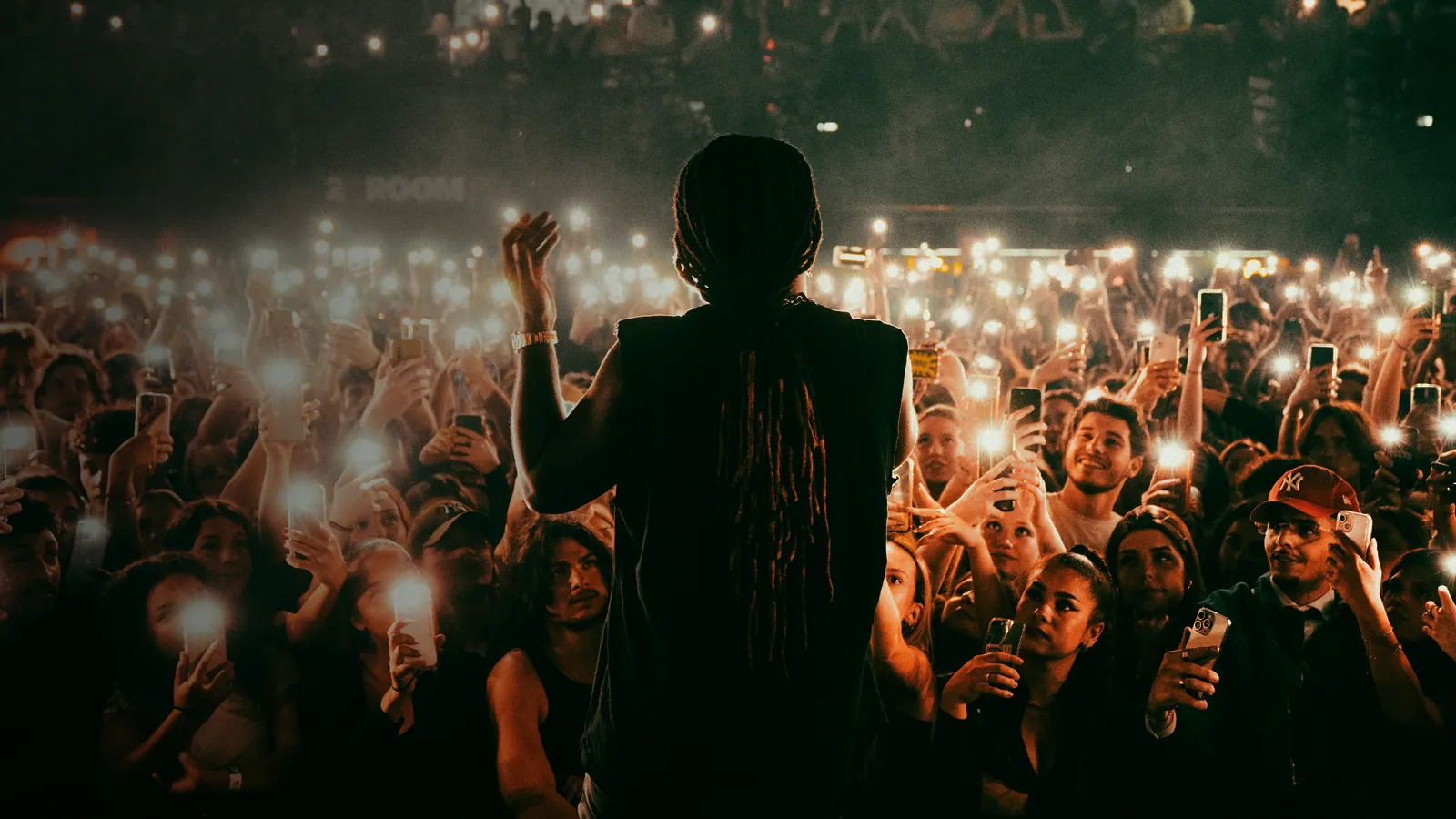
Something takes off. A clip, a snippet, a post you did not think about much. The numbers climb for about two days and then they go back to normal, and a month later you cannot point at anything that changed.
That is the usual outcome, and it is not bad luck. A spike hands you attention on loan. What you do in the window decides whether any of it becomes yours.
The 48 hours that decide it {#the-48-hours}
The mistake is treating a spike as a result. It is a queue of strangers, and queues disperse.
So the first job is a destination. Before you do anything clever, make sure the link in your bio goes somewhere that asks for one thing. Not a menu of nine links. One page, one ask: the song, or the list, or the show. A person who arrived from a fifteen second video will make exactly one decision before they leave.
The second job is to collect something you keep. A follow is a lease on someone’s attention that the platform can revoke by changing what it shows them. An email address, a phone number, a Discord invite, a Beacons subscriber: those survive a distribution change. Ask for it while the traffic is live, not on Monday when you have time.
I would rather have four hundred emails from a spike than forty thousand views from it, and that is not a modest position. Four hundred people you can reach directly will show up to a show, pre-save a record and buy a shirt. Forty thousand views will not do any of those things by themselves.
Send it somewhere that converts {#send-it-somewhere}
Not all attention is worth the same, and the gap is bigger than people expect. Short-form video platforms tend to move people to streaming better than a feed post does, because the sound is already the thing they engaged with. A photo post asks the viewer to go and look for the music. A video with your track under it has already played it to them.
Which is why the only number worth trusting here is your own. Set up a separate link for each platform so you can tell them apart, then look at click rate rather than view count. Most artists discover their smaller platform is doing more work than the big one, and then move their effort accordingly.
The wider context is worth holding in your head while you do this. Luminate’s 2026 midyear report put global on-demand streams up 9.8 percent, to 2.8 trillion, while US growth reached only 4.8 percent. More listening is happening than ever, and it is spread across more releases than ever. Attention is abundant. The scarce thing is a way to reach the same person twice.
Virality got faster and worse at the same time {#faster-and-worse}
Two numbers from Chartmetric explain why this article exists at all.
Reaching 100,000 TikTok posts on one song took 340 days in 2020. In 2025 it takes 48, and one BLACKPINK track did it in 5. Songs travel faster than they ever have.
And they convert worse. Each TikTok post drove around 738 Spotify streams in 2020. By 2025 that is roughly 275, a fall of 63 percent. The cause is saturation: more songs chasing the same feed, and audiences trained by years of pre-release snippets to hear a hook without going to look for it.
7x faster to reach 100,000 posts, from 340 days to 48.
63 percent less efficient per post, from about 738 streams to about 275.
Put together, those two numbers say something specific. The spike is easier to get and worth less when you get it. That does not make virality pointless, it makes the conversion window the entire value, which is what the rest of this piece is about.
Ship inside the window, then answer the sound {#ship-inside-the-window}
The one behaviour that separates a spike that compounds from a spike that evaporates is shipping while it is still happening.
The average viral window now runs about 48 days before the attention moves to somebody else. That is longer than the two days of peak traffic and much shorter than most release schedules, which is the mismatch that wastes so many of these moments. An artist whose next release is eight weeks out has already missed it.
Three moves, in order:
Ship fast. Release the full song, a live version or a video within days of the spike, not weeks. Whatever is closest to finished wins over whatever is best.
Give it a second format. A live take or a visualiser gives the platforms a fresh object to recommend and gives the audience a reason to hear the same song again without it being a repost.
Answer the sound. Post two or three follow-up clips using your own audio. When other people are already making videos to your song, you are the only account that can post as the source, and that is the cheapest reach available to you all year.
Do not redecorate the museum {#do-not-redecorate}
Here is where most spikes get wasted, and it looks like enthusiasm.
Something works, so you make five more of it. The feed fills with variations on the one post that popped, and the act you were building gets buried under the thing that happened to it. Six weeks later the spike is gone and so is the through line.
Think of your profile as a room somebody walks into. They found one piece, they liked it, now they are looking around to decide whether to stay. What they need to see is a body of work that makes sense. A wall of near-identical reactions to a single moment tells them there is nothing here except the moment.
Post again fast, yes. Post the thing you were already making. If the viral clip genuinely revealed something about what people want from you, that is real information, and you fold it into the next month of work rather than into the next four days of panic.
What the week should leave behind {#what-it-leaves}
Judge a spike by what is still there in thirty days:
Emails or numbers collected, with a name attached. Pre-saves or follows on the platform where you actually release. One new piece of work made while people were paying attention. And a note in your own file about which link converted and which did not, because you will spike again and next time you will start from evidence.
Everything else was weather.
Your move. Fix the link in your bio today, before anything takes off. It costs twenty minutes and it is the only part of this you cannot do retroactively.
"How to turn a viral week into an audience you own" as a carousel publishes on @109music.co. The embed drops in here once it is live.
Common questions
How long does a viral spike on TikTok or Reels actually last?
Plan for two days of real traffic and a long thin tail after that. The exact shape varies, which is why the work is to convert early rather than to predict the curve. If you wait a week to set up a landing page you have already spent the window.
Should I post more when something goes viral?
Post again quickly, but post the same thing you were already making. The audience arriving is deciding whether you are worth following based on the three posts under the one they found, so those three should look like your act rather than like a reaction to the spike.
How much is a TikTok post worth in Spotify streams now?
Roughly 275 streams per post in 2025, down from about 738 in 2020 according to Chartmetric. The drop of 63 percent is the reason a spike converts worse than it used to, and the reason the conversion work matters more than the spike itself.
Is an email list still worth building for a musician in 2026?
Yes, because it is the only list you keep when a platform changes its distribution. It does not have to be email specifically. A phone number, a Discord, a Beacons subscriber list all do the same job: a direct line that nobody can throttle.