4 new ways your music pays in 2026
Four revenue lanes opened for independent artists in one month: paid fan remixes on Spotify through the Merlin deal, TikTok LIVE gifts on original songs, SoundCloud's hand-picked The Upload, and YouTube fan funding that stays at 500 subscribers while ad thresholds double in 2027.
Giorgio Trovato · Unsplash License
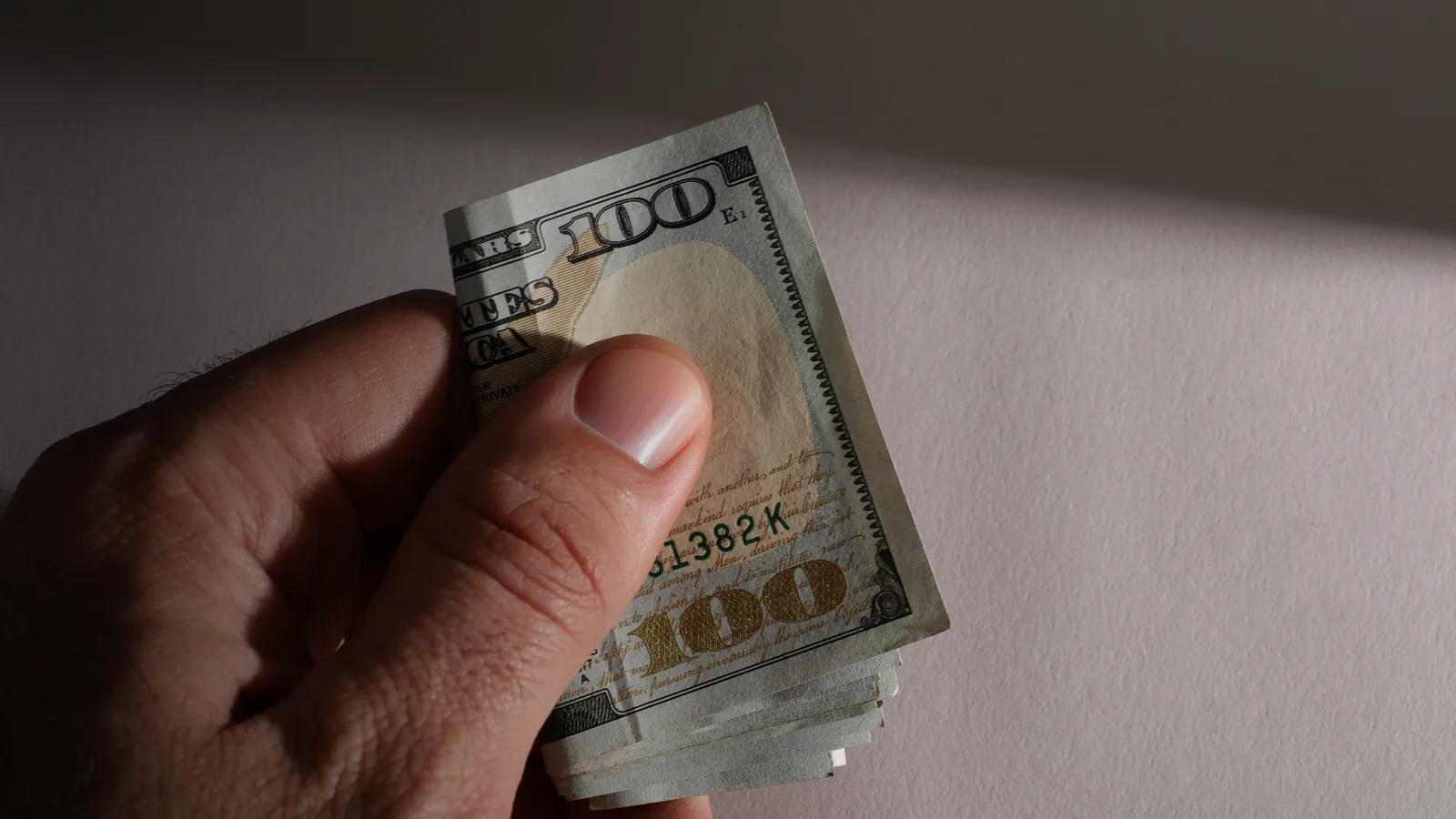
Four separate revenue changes landed inside a single month, and none of them require a label to access. Here is each one with its threshold and its catch.
Lane 01 · Fans pay to remix your song
On 4 August 2026, Music Week reported that Merlin’s independent label members joined Spotify’s paid fan remix and covers add-on. Merlin’s membership represents roughly 15 percent of global recorded music, which moves this from a major-label feature to something most distributed independents can reach.
The mechanic: listeners pay for the add-on, create their own versions inside Spotify, and participating rights holders are credited and compensated.
Your move. Ask your distributor whether your catalogue is opted in. This is a passive lane once enabled, and remix culture rewards tracks with a strong recognisable hook rather than a big name.
Lane 02 · TikTok pays for your sound in LIVE
TikTok’s Songs of LIVE, rolled out in July 2026, turns original tracks into paid gifts that viewers send during a live stream. Music is uploaded through SoundOn or through your own posts.
Payout splits for Songs of LIVE are still unpublished, and our source here is an aggregator rather than TikTok's own newsroom. Treat the lane as real and the economics as unproven until TikTok documents the rates.
Your move. If you already stream on TikTok, get your originals into the gift catalogue now and measure it yourself for a month. If you do not stream, this is not a reason to start.
Lane 03 · A human picks your track on Fridays
SoundCloud launched The Upload on 3 August 2026, reported by Hypebot as a deliberate answer to algorithmic fatigue. Editors hand-pick emerging tracks every Friday and write commentary on each selection. There is no follower minimum.
That last detail is the point. Almost every discovery surface in music now gates on existing traction, which makes them useless to the artists who most need discovery. A human editor with no follower floor is a genuinely open door.
Your move. Upload to SoundCloud with complete metadata and submit weekly. The cost is a few minutes and the downside is zero.
Lane 04 · 500 subscribers unlocks the money on YouTube
Hypebot reported on 11 August 2026 that YouTube is doubling its ad monetization requirement from 4,000 to 8,000 valid public watch hours, effective February 2027. The headline reads like bad news and mostly is, for creators chasing ad revenue.
The part that matters more for musicians went unchanged: the fan funding tier still opens at 500 subscribers and 3,000 watch hours. That tier carries memberships and Super Thanks, which are direct payments from people who already like you.
The ad gate doubles. The fan funding gate, the one that pays you directly, stays at 3,000 hours and 500 subscribers.
Your move. Stop treating 4,000 hours as the finish line. At 500 subscribers you can already take money directly from fans, and direct fan payment beats ad revenue per listener at every scale an independent artist operates at.
Update, September 2026: the number that decides all four {#your-share}
Every lane above pays out of a pool, and the mechanic underneath the pool is the thing most artists get wrong.
Platforms keep roughly 30 percent of streaming revenue. Rights holders take the other 70, split about 80 percent to the recording and 20 percent to the songwriting. That much is widely known. The part that is not: what reaches you is decided by your share, meaning your streams divided by the platform’s total streams, and not by a fixed rate per play.
The consequence is uncomfortable and worth internalising. Your payout can fall while your own streams hold perfectly flat, simply because the platform grew faster than you did. Roughly 3 trillion Spotify streams a year generate around 15 billion dollars, which works out at somewhere near 3,000 to 3,500 dollars per million streams depending on country and subscription tier. That figure moves every year, and not because of anything you did.
Your move. Stop tracking streams as your revenue metric and start tracking revenue per listener. The first number is a share of somebody else’s pool. The second is a fact about your own audience.
Where the money actually moved in 2025 {#where-the-money-moved}
The IFPI Global Music Report puts global recorded music revenue at 31.7 billion dollars in 2025, up 6.4 percent, the eleventh consecutive year of growth. Underneath that headline the movement is not where most coverage points.
Paid subscriptions grew 8.8 percent to 837 million accounts and now account for just over half of global revenue. Physical did not behave like a dying format: vinyl grew 13.7 percent, and Luminate’s midyear read has CDs up 16 percent. And the growth is increasingly not in English-language markets, with Latin America up 17.1 percent in its sixteenth straight year of growth and China up 20.1 percent.
31.7bn dollars global recorded music revenue, up 6.4 percent.
837 million paid subscription accounts, up 8.8 percent.
13.7 percent vinyl growth, with CDs up 16 percent.
17.1 percent growth in Latin America, and 20.1 percent in China.
Your move. Two of those four numbers are actionable this month. A physical format for the fans who want one, and a Spanish-language version of a hook or a regional collaboration, are both cheaper than a paid campaign and both point at where the growth actually is.
Serve the fans you already have first {#serve-your-fans}
The 837 million number is the one to sit with, because it settles an argument most independent artists are still having with themselves.
That many people already pay for music every month. The habit is established. Nobody needs convincing that paying for music is normal, which means the gap between you and revenue is not persuasion, it is that you have not offered them anything to buy.
So audit the offer before you chase more reach. List every way a fan could currently give you money. If the list is only streaming, that is the finding, and it is fixable in a week: a subscription tier, a physical bundle, a paid live moment, one thing behind a price.
Selling deeper into the audience you have beats selling wider into one you do not, and it is the cheaper of the two by a distance.
Your move. Write the list today. Most artists discover it has one item on it and that the item pays the least per fan of anything they could offer.
What these four have in common

Each lane pays for depth rather than reach. None of them rewards a passive listener.
109MUSIC · Own work
Every one of them pays for depth rather than reach. Remixes need a hook worth reworking. Gifts need somebody watching you live. Editorial picks need a real record. Memberships need people who would pay to keep you going.
The streaming economy paid for scale. These lanes pay for the small number of people who actually care, which is a better fit for how independent careers are actually built.
"4 new ways your music pays in 2026" as a carousel publishes on @109music.co. The embed drops in here once it is live.
Common questions
What is the YouTube fan funding threshold in 2026?
500 subscribers plus 3,000 valid public watch hours unlocks fan funding features such as memberships and Super Thanks. The separate ad revenue threshold doubles from 4,000 to 8,000 watch hours in February 2027, but the 500-subscriber fan funding tier is unchanged.
Why did my streaming payout drop when my streams stayed the same?
Because payout is driven by your share of the platform's total streams, not by a fixed rate per stream. If the platform grows faster than you do, your slice of the same pool gets smaller even when your own numbers hold flat.
Can independent artists earn from Spotify fan remixes?
Yes. The Merlin agreement of 4 August 2026 brought independent label members, representing roughly 15 percent of global recorded music, into Spotify's paid fan remix and covers add-on. Rights holders opt in and are credited and compensated when fans create with their tracks.
Sources
- Music Week: Spotify fan-made covers and remix tool adds Merlin's independent label members (4 Aug 2026)
- SocialBee: TikTok updates roundup, Songs of LIVE (July 2026)
- Hypebot: SoundCloud adds The Upload to combat algorithmic fatigue (3 Aug 2026)
- Hypebot: YouTube doubles watch hours for monetization (11 Aug 2026)
- IFPI Global Music Report 2026
- Andrew Southworth: how streaming services actually pay artists (21 Aug 2026)