Market your release like JENNIE: one drop, two products
Months of live seeding before any announcement, a reveal split across two dates, a digital EP of 3 tracks against a physical of 6, and 3 random photocards from a pool of 9 in every order. Five mechanics from the Fallen Angel rollout that scale down to independent budgets.
Picikepocok22 · CC0
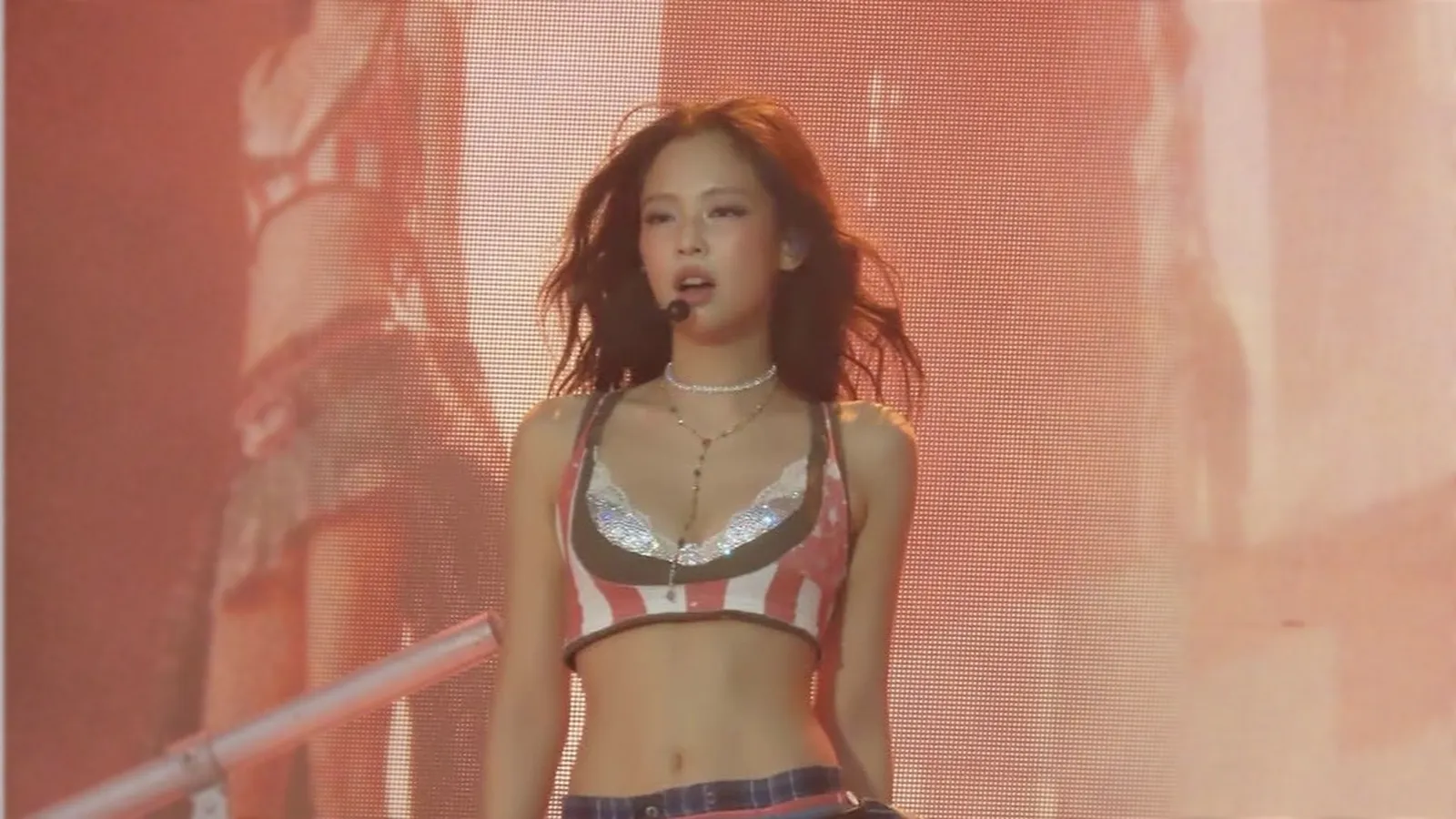
The interesting thing about the Fallen Angel rollout is not its budget. It is that the release date was the middle of the campaign rather than the end of it.
Five mechanics, all of them reconstructable from public information, and four of the five cost nothing at independent scale.
Move 01 · Seed it live before you announce it {#seed-it-live}
Material from the EP was played across the summer 2026 festival run, at Governors Ball, Roskilde, Open’er, Mad Cool, Lollapalooza and Summer Sonic, before there was any formal announcement.
By the time the record was announced, an audience had already heard parts of it, filmed them and posted them. The announcement did not have to create interest, it had to convert interest that already existed.
Your version. Play the unreleased song at every show for two months before you announce it. If somebody films it, that clip is a free trailer with a stranger’s credibility attached rather than yours.
Move 02 · Two reveals, not one {#two-reveals}
The EP was announced on 20 August. On 23 August, a separate reveal disclosed that three additional tracks would be exclusive to the physical CD.
That is the same body of information most artists would compress into a single caption. Split across two dates it produced two news cycles, and the second one carried the more interesting fact.
Move 03 · One release, two products {#two-products}
The digital EP holds 3 tracks. The physical CD holds 6.
This is the move worth stealing, and it is not about CDs. A release with two versions has two prices and two audiences: everybody who will listen, and the smaller group who will pay. Most independent artists build only the first and then wonder why streaming is the whole income.
Digital: 3 tracks, free to stream, reaches everyone. Physical: 6 tracks, roughly 11.65 dollars, reaches the people who were going to spend money anyway. Same campaign, same artwork, two products.
Your version. Hold one song back from the streaming release and put it behind a physical purchase, a Bandcamp exclusive or a paid tier. One track is enough to make the paid version a different record rather than the same record with a postage cost.
Move 04 · Make them chase the set {#chase-the-set}
Pre-orders opened 25 August through Weverse Shop, in two visually distinct versions plus a bundle. Every order included a CD, a 12-page booklet, a 4-panel poster, and 3 random photocards pulled from a pool of 9.
Three from nine is the entire mechanic. A fan who wants all nine cannot buy their way there in one order, and knows it before they check out. The purchase stops being a transaction and becomes a position in a set they do not yet hold.
Your version. Print three variants of one item, ship them at random, and announce the full set publicly so buyers know what they might be missing. The cost difference between one design and three is a setup fee. The behaviour difference is repeat purchase.
Move 05 · The release date is the midpoint {#the-midpoint}
Physical orders ship through 29 October ahead of a 30 October physical street date. The digital drop on 28 August sits in the middle of a funnel that runs for roughly two more months.
Most independent rollouts treat release day as the finish line and go quiet the following week, which is precisely when the attention they just bought is at its cheapest to convert. Here the release day is a checkpoint with eight weeks of scheduled activity behind it.
For context on what the release day itself did: the music video passed roughly 5 million YouTube views in 24 hours. That number is the visible part. The pre-orders opened three days before it and ship two months after.
Your version. Before you announce anything, write down what happens in the four weeks after release. If the answer is nothing, the rollout ends on the day the audience is largest, which is the most expensive possible time to stop.
What scales down and what does not {#what-scales}
The festival run does not scale. Weverse does not scale. Everything else does.
Seeding a song live is a setlist decision. Splitting an announcement is a calendar decision. Holding a track back is a distribution setting. Randomising a variant is a print order. Planning the month after release is an afternoon with a calendar.
Four of the five moves here are structural, and structure is the part you can copy.
Carousel 01, published 31 August 2026 — view on Instagram
Common questions
Why would an artist put tracks only on the physical release?
It turns one release into two purchasable products. The digital version serves everyone, and the physical version gives the fans who would pay more a concrete reason to. In JENNIE's case the digital EP held 3 tracks and the CD held 6, so the physical was not merchandise attached to a record, it was a different record.
What is a chase mechanic in music merch?
Shipping a random selection from a larger set rather than letting the buyer choose. Fallen Angel pre-orders included 3 photocards drawn from a pool of 9. A fan who wants the full set has a reason to buy more than once, and a reason to talk to other fans about trading.
Does a physical release still matter in 2026?
For chart position and for revenue per fan, yes. Physical purchases count toward Hanteo and Circle, and vinyl grew 13.7 percent in 2025 while CDs grew 16 percent according to Luminate's midyear read. The format is small in absolute terms and disproportionate in what it pays per buyer.